
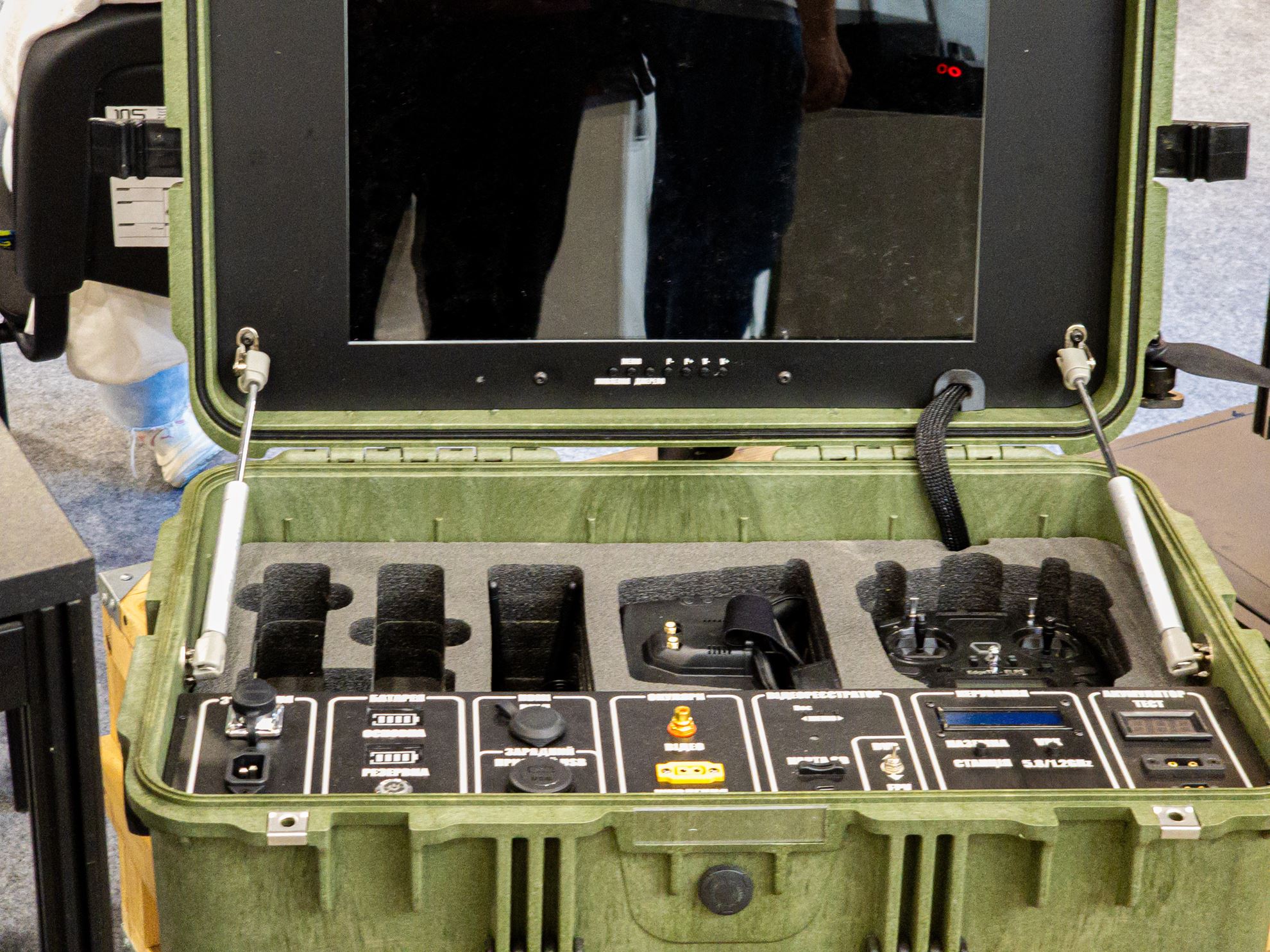
By Dustin Guttadauro, Product Line Manager - Telecom & Fiber, Infinite Electronics
Ground control stations (GCS) deployed in temporary or austere environments face a unique risk: uncontrolled electrical transients. Unlike permanent installations with engineered grounding systems, field setups often rely on improvised power and grounding, increasing vulnerability to lightning, static discharge and generator-induced surges.
These transient events can travel through RF infrastructure—particularly antenna lines—directly into sensitive receivers and processing equipment. Without proper mitigation, even a brief voltage spike can result in immediate hardware failure or latent damage that degrades performance over time.
Implementing effective grounding and surge protection strategies is essential to maintaining system reliability and protecting mission-critical assets.
Key Takeaways
- Electrical transients can propagate through antenna systems and damage GCS electronics
- Surge protectors provide a controlled path to ground for high-voltage events
- DC blocking prevents unwanted low-frequency energy from reaching sensitive components
- Layered protection strategies improve resilience against both transient spikes and sustained overload
- Proper grounding implementation is critical in temporary and field-deployed environments
The Physics of Lightning and Surge Damage in GCS
Lightning and electrical surges introduce extremely high current and voltage levels over very short time intervals.
Even without a direct strike, nearby lightning can induce significant voltage in long conductors such as antenna cables. These induced transients can travel along the coaxial path and enter the GCS, where sensitive RF front-end components are particularly vulnerable.
Antennas effectively act as collection points for this energy, behaving like unintended lightning receptors. Without a controlled discharge path, that energy will seek ground through connected equipment.
Why are Temporary Drone Bases More Vulnerable?
Temporary deployments lack the engineered grounding infrastructure found in permanent facilities.
Soil conditions may vary, affecting grounding effectiveness. Portable generators introduce additional electrical noise and transient events. Grounding connections are often shorter-term and may not achieve low-impedance performance across the full frequency spectrum.
This combination creates an environment where transients are more likely to propagate into equipment rather than being safely dissipated.
Implementing Surge Protection with the LCSP1048
Surge protection devices provide the first line of defense against transient events.
The LCSP1048 is an inline N-type surge protector that uses gas discharge tube (GDT) technology. When a high-voltage transient occurs, the gas inside the device ionizes, creating a low-resistance path to ground. This diverts the surge away from downstream electronics.
Under normal operation, the device remains effectively transparent to RF signals, introducing minimal insertion loss while providing protection only when needed.
Best Practices for N-Type Connector Integration
Proper placement of surge protection is critical to effectiveness.
The LCSP1048 should be installed at the entry point where the antenna feedline enters the GCS enclosure. This ensures that transient energy is diverted before it can propagate through internal systems.
The grounding connection must be low impedance and physically short to minimize inductive effects. Using wide grounding straps or braids improves high-frequency grounding performance compared to thin wires.
DC Blocking and Signal Isolation Strategies
In addition to high-voltage transients, lower-frequency energy can travel along coaxial conductors.
DC blocking techniques prevent unwanted current from flowing along the center conductor while allowing RF signals to pass. This helps isolate sensitive equipment from power-related disturbances without affecting signal transmission.
Proper isolation reduces the risk of cumulative damage and improves overall system stability.
Using the LCAT1000-03 for Dual-Purpose Protection
While primarily designed as an attenuator, the LCAT1000-03 can contribute to system protection.
By reducing signal amplitude, it helps prevent receiver front-end overload in environments with strong RF signals. This is particularly useful when combined with surge protection, where residual energy may still be present after initial diversion.
Attenuation also improves impedance matching, reducing reflections that can amplify transient effects within the system.
Proper Grounding Rod Installation in Austere Environments
Effective grounding begins with proper installation of grounding rods.
Rods should be driven deep enough to reach stable, conductive soil. In dry or sandy environments, multiple rods or soil conditioning techniques may be required to achieve acceptable grounding performance.
Connections between equipment and ground rods should be as short and direct as possible. Wide conductive straps or braided conductors provide lower impedance paths than standard wire, especially for high-frequency transient energy.
Common Grounding Mistakes to Avoid
Improper grounding can introduce new problems rather than solving existing ones.
Ground loops occur when multiple grounding paths create unintended current flow between components, leading to noise and potential interference.
Daisy-chaining grounding connections instead of using a single-point ground can increase impedance and reduce effectiveness. Each protective device should have a direct, low-impedance path to ground.
Ensuring consistent grounding architecture across the system is essential for reliable protection.
L-com’s broad selection of surge protection and RF interconnect solutions supports reliable UAV ground station deployment in demanding environments. For minimal downtime and rapid deployment, we ship quickly, with same-day shipping on qualified in-stock online orders placed Monday through Friday before 5 p.m. EST.
Frequently Asked Questions (FAQ)
What is a transient in a drone ground station environment?
A transient is a short-duration spike in voltage or current, typically caused by lightning, static discharge or switching events in power systems. These spikes can propagate through antenna and power lines, damaging sensitive RF and electronic components.
How does a gas discharge tube surge protector mitigate high-voltage events?
A gas discharge tube remains non-conductive under normal conditions. When a voltage spike exceeds its threshold, the gas ionizes and creates a conductive path to ground, rapidly diverting the surge away from protected equipment.
Why is grounding more critical in temporary UAV deployments than in fixed installations?
Temporary setups lack engineered grounding systems and often rely on inconsistent soil conditions and portable power sources. This increases the likelihood that transient energy will travel through equipment rather than being safely dissipated.
Can attenuators provide protection in addition to surge suppression?
Attenuators such as the LCAT1000-03 do not replace surge protectors but can reduce signal amplitude and help prevent receiver overload. When used alongside surge protection, they contribute to a layered defense strategy that improves overall system resilience.