
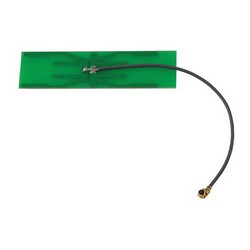
In the not so distant future, the world will be fully automated with machines being able to communicate with little or no interaction from humans, thanks to the arrival of the Internet of Things (IoT) and the use of embedded antennas.
These small form factor antennas are a perfect fit for the shrinking size of IoT devices, while still being able to keep up with the massive amounts of data that will need to be transmitted as the IoT connects physical devices with software based management and control applications.
Embedded antennas are small, yet powerful antennas with many offering multiband support for use in mobile and fixed data applications. Their key performance attributes include high efficiency, low power consumption, low return loss and isolation.
High efficiency brings better signal reception, improving the system’s ability for faster data transfer rates. Reduced power consumption allows for increased longevity. Less return loss means more power transmitted, and isolation limits the amount of crosstalk interference. Embedded antennas can work with high-frequency or low-frequency systems, some feature MIMO technology and smart antennas have been introduced that feature embedded GPS and Flash memory capabilities.
As IoT deployments get underway, there are more embedded antenna options to consider to take full advantage of this exciting era of automation.
To help you succeed with your IoT implementations, we offer a full line off-the-shelf, embedded antennas and antenna connectors ready to ship the same-day, plus custom designed antennas to suite all of your IoT needs.
Embedded Antennas and the IoT
Resources
- Application Overviews
- Blog: Engineering Hub
- Case Studies
- Credit Application
- Connector Charts
- Custom Cable Configurators
- Featured Products
-
Frequently Asked Questions
- How do I change my password?
- What is the difference between simplex and duplex fiber optic cable?
- How do I update my personal and company details?
- How do I add or edit my address information?
- How do I view my order history?
- How do I reorder?
- How can I change my communication preferences?
- How do I sign up for your newsletter?
- What does RG316/U mean?
- What is a Distributed Antenna System (DAS)?
- What is plenum rated cable, and why is plenum cable more expensive than PVC cable?
- What is the difference between male and female connectors?
- What is the difference between 75 Ohm and 50 Ohm coaxial cable and when should each one be used?
- What is the difference between VGA, SVGA and UXGA, and does L-com sell cables for each?
- What are some popular Fiber Optic connector types?
- What do the fiber terms 9/125, 50/125 and 62.5/125 refer to?
- Why Use Shielded Cat 6 Cable vs. Unshielded Cat 6 cable?
- Is your website secure?
- How do I return a purchase?
- What are your shipping and processing fees?
- What is the difference between VGA, SVGA and UXGA?
- What are common WiFi Antenna FAQs?
- How do I check my order status?
- What does IP67 mean? I need waterproof cables, connectors, and adapters
- How do I request your product guide?
- What is your Privacy Policy?
- How can I follow L-com on social media?
- What are your Terms and Conditions?
- What is your contact information?
- What is Coaxial Cable?
- What is a USB Cable?
- What is a DB9 Connector?
- Can Too Much Gain Be A Bad Thing?
- What is the Difference between Stranded and Solid Conductors?
- What are the Advantages and Disadvantages of ISM Band Frequencies?
- Industry Application Brochures
- Industrial Solutions
- Product Brochures
- Product Guide Downloads
- Technical Briefs and Articles
- White Papers
- Wireless Calculators
