
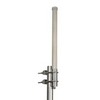
2.4 GHz UDT-Series Omni Directional Antennas w/Electrical Downtilt
2.4 GHz UDT-Series omni antennas with electrical downtilt support wireless networking and RF communication systems operating in 2.4 GHz ISM band for IEEE 802.11b/g wireless LAN networks, ISP base stations, multipoint wireless systems, and public hotspot deployments. Operating across 2400-2500 MHz frequency range with 50-ohm impedance featuring vertical polarization and 360-degree horizontal radiation pattern, these antennas offer 9 dBi and 11 dBi nominal gain with 7° and 8° electrical downtilt angles. Featuring fiberglass radomes, DC-grounded lightning protection, integral N-female connector, and mast-mount hardware for rooftop installations.
For comprehensive 2.4 GHz omni directional antenna solutions beyond UDT-Series configurations, explore our Omni Directional Antennas - 2.4 GHz category, featuring HGV-Series, U-Series, MIMO, UR-Series, PRO-Series, DPU, UP, RE Desktop, site survey, and NMO series designs for WLAN, WiFi, and wireless infrastructure applications.
Related Categories:
- 2.4 GHz U-Series Omni Directional Antennas
- 2.4 GHz PRO-Series Omni Directional Antennas
- 2.4 GHz UP-Series Omni Directional Antennas
- 2.4 GHz RE Desktop Series Omni Directional Antennas w/Magnetic Base
- 2.4 GHz US-Series Omni Directional Site Survey Antenna
FAQs
What are 2.4 GHz UDT-Series omni antennas used for in wireless systems?
2.4 GHz UDT-Series omni antennas with electrical downtilt are designed for wireless networking deployments where broad horizontal coverage and controlled vertical signal distribution are required. These omnidirectional WiFi antennas support applications such as IEEE 802.11b/g wireless LAN networks, ISP base stations, multipoint wireless systems, and public hotspot deployments. Typical applications include wireless ISP base stations, public WiFi hotspot infrastructure, mesh network nodes, and multipoint wireless communication systems in apartment complexes, industrial facilities, and community wireless networks.
What frequency range and impedance do 2.4 GHz UDT-Series omni antennas support?
2.4 GHz UDT-Series omni antennas operate across the 2400 MHz to 2500 MHz frequency range and support 50-ohm impedance systems commonly used in wireless infrastructure equipment. The frequency range accommodates 2.4 GHz ISM band operations supporting IEEE 802.11b/g wireless LAN networks and multipoint wireless systems. 50-ohm impedance matches standard wireless access points and base station equipment used in public hotspot deployments and community wireless networks.
What gain options are available for 2.4 GHz UDT-Series omni antennas?
2.4 GHz UDT-Series omni antennas feature nominal gain options of 9 dBi and 11 dBi with electrical downtilt angles of 7° and 8° supporting improved coverage in close-range wireless deployments. The 9 dBi and 11 dBi gain levels provide signal amplification for ISP base stations and public WiFi hotspot infrastructure requiring extended coverage range. Multiple gain options enable flexible deployment in IEEE 802.11b/g wireless LAN networks and multipoint wireless communication systems with varying coverage requirements.
What radiation pattern do 2.4 GHz UDT-Series omni antennas provide?
2.4 GHz UDT-Series omni antennas feature vertical polarization and a 360-degree horizontal radiation pattern supporting consistent signal distribution around the installation site in wireless networking deployments. The omnidirectional horizontal pattern provides uniform coverage in all directions from rooftop, tower, and elevated mounting installations. Vertical polarization matches standard wireless access point and base station equipment used in ISP base stations, mesh network nodes, and community wireless networks.
What construction features ensure 2.4 GHz UDT-Series antenna durability?
2.4 GHz UDT-Series omni antennas are built for outdoor installations featuring durable fiberglass radomes designed to protect internal antenna elements from environmental exposure. The antennas include commercial-grade radiating elements and DC-grounded lightning protection supporting stable operation in wireless infrastructure environments. Fiberglass radome construction with lightning protection supports reliable deployment on rooftops, towers, and elevated structures in apartment complexes, industrial facilities, and public hotspot installations.
What connector and mounting hardware come with 2.4 GHz UDT-Series antennas?
2.4 GHz UDT-Series omni antennas include an integral N-female connector with threaded coupling allowing straightforward connection to standard RF coaxial cables used in wireless access points and base station equipment. Mast-mount installation hardware is included supporting pole or mast deployments commonly used in outdoor WiFi antenna installations and wireless distribution systems. The N-female connector and mounting hardware enable installation on rooftops, towers, and elevated mounting structures in ISP base stations and multipoint wireless systems.
What VSWR and power handling do 2.4 GHz UDT-Series omni directional antennas support?
2.4 GHz UDT-Series omni antennas support VSWR values up to 1.5:1 and maximum input power up to 150 watts allowing integration into a variety of wireless networking systems. The 1.5:1 VSWR specification ensures efficient impedance matching in IEEE 802.11b/g wireless LAN networks and ISP base station equipment. 150 watts maximum input power accommodates high-power wireless infrastructure installations in public hotspot deployments and multipoint wireless communication systems.
Need assistance selecting the right 2.4 GHz UDT-Series omni antenna for your wireless ISP, public hotspot, or rooftop WiFi installation? Our engineering team provides expert technical guidance on gain selection, electrical downtilt requirements, mounting configurations, and coverage planning for your specific IEEE 802.11b/g wireless LAN, multipoint wireless system, or community wireless network application requirements.
Contact Sales: Sales@L-com.com
Product Technical Support: techsupportrf@infiniteelectronics.com
L-com offers a selection of UDT-Series omnidirectional antennas designed for reliable operation across a range of wireless networking environments.
