
Choosing the Right WiFi Antenna for Your Application
Download the Full Whitepaper (PDF)Executive Summary
Key Takeaways:
- Choosing the right WiFi antenna directly impacts range, coverage, and network performance.
- There are two main types of antennas: omnidirectional (360° coverage) and directional (focused signal).
- Directional antennas (like Yagi or parabolic ones) are ideal for point-to-point links such as building-to-building connectivity.
- Omnidirectional antennas are best for broad coverage areas with multiple users.
- Antenna gain affects performance—higher gain increases range but narrows coverage angle.
- Line-of-sight is critical for outdoor wireless links to ensure optimal signal strength.
- Selecting the right antenna requires evaluating the environment, distance, and application type.
Introduction
Often a customer will ask the question “How do I know which antenna is best for my application?” To help answer those questions we have developed this wireless network applications paper to help you choose the right WiFi antenna for your wireless application. There are two main types of WiFi antennas, Omni directional and Directional.
Omni Directional Antennas
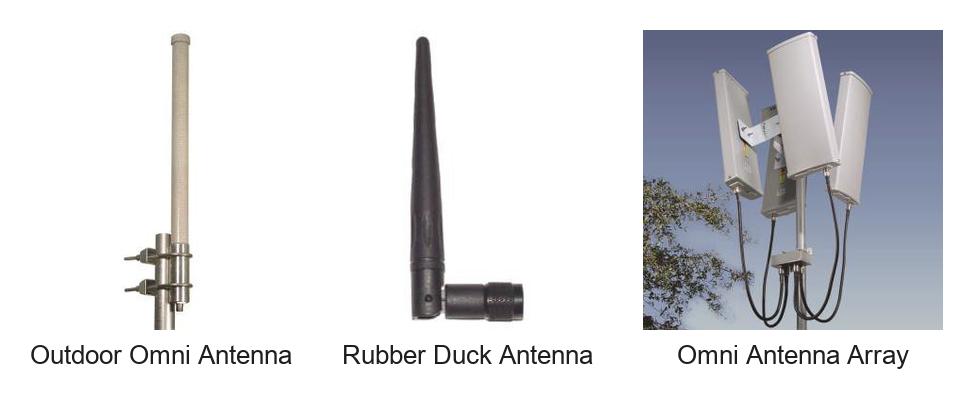
Omni directional antennas provide a 360° donut shaped radiation pattern to provide the widest possible signal coverage in indoor and outdoor wireless applications. An analogy for the radiation pattern would be how an un-shaded incandescent light bulb illuminates a room. Types of Omni directional antennas include “rubber duck” antennas often found on access points and routers, Omni antennas found outdoors, and antenna arrays used on cellular towers.
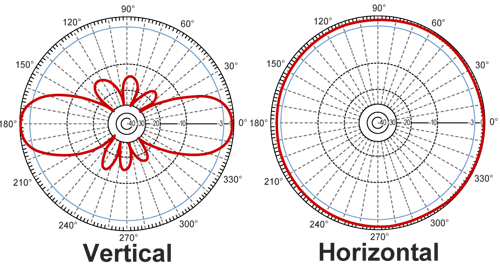
Typical Omni Directional Antenna Gain Pattern
Recommendations
To select the right WiFi antenna for your application:
- Define your use case (indoor coverage, outdoor link, campus network)
- Choose omnidirectional antennas for general coverage
- Use directional antennas for long-range or focused communication
- Evaluate gain vs coverage trade-offs
- Ensure proper placement and line-of-sight for outdoor deployments
- Test performance before final deployment
Working with experienced network professionals can help ensure optimal antenna selection and performance.
Directional Antennas
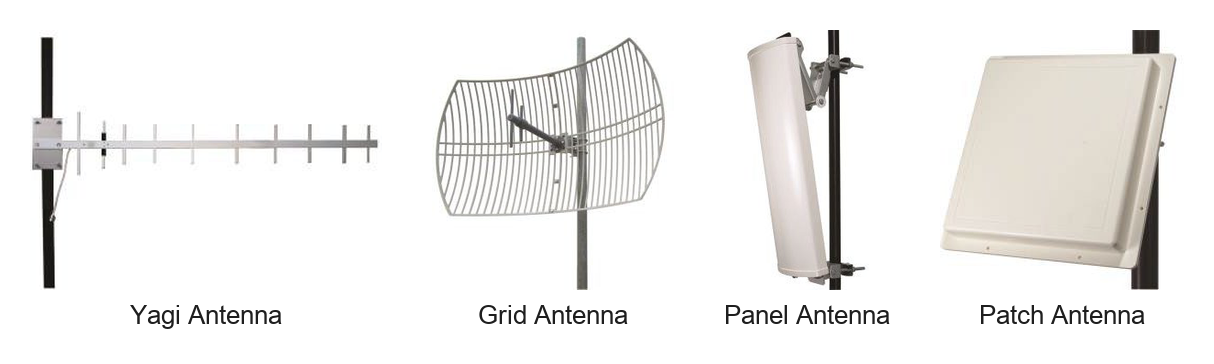
Directional antennas, as the name implies, focus the wireless signal in a specific direction resulting in a limited coverage area. An analogy for the radiation pattern would be how a vehicle head light illuminates the road. Types of Directional antennas include Yagi, Parabolic grid, patch and panel antennas.
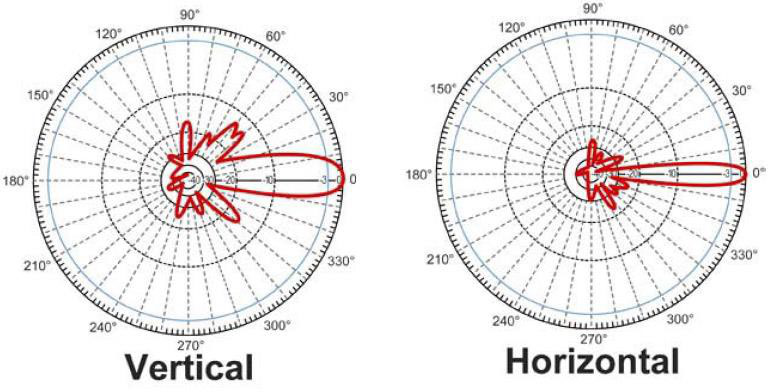
Typical Directional Antenna Gain Pattern
Common WiFi Network Applications
Below are some common WiFi network applications and the antenna type best suited to each.
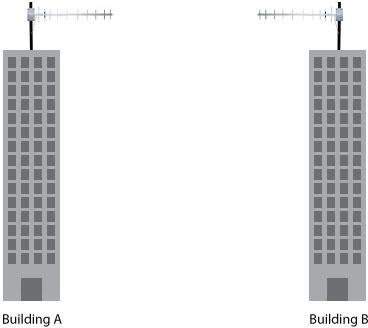
I want to connect one building to another building
In this design scenario you will need a directional antenna such as a Yagi, or Parabolic Grid antenna. This is called a point to point wireless link. Each building should be outfitted with a directional antenna and the antennas need to point at each other inline. Also make sure there are no obstructions between the two antennas such as trees or buildings. Clear Line of sight is critical.
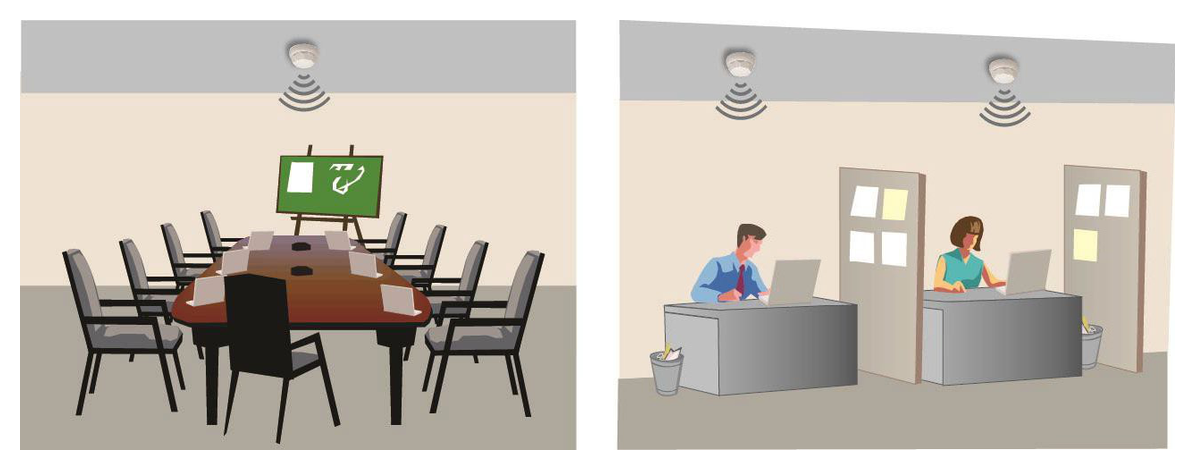
I want to add WiFi to my office building (inside)
To provide wireless coverage to an inside office space use an Omni directional antenna which provides 360° wireless coverage. The style of antenna typically used is the ceiling mount Omni directional antenna. The antenna gain pattern for the ceiling mount Omni directional antenna in this application is donut shaped with good vertical as well as horizontal coverage providing connectivity to WiFi devices including laptops, printers, tablets, and smart phones.
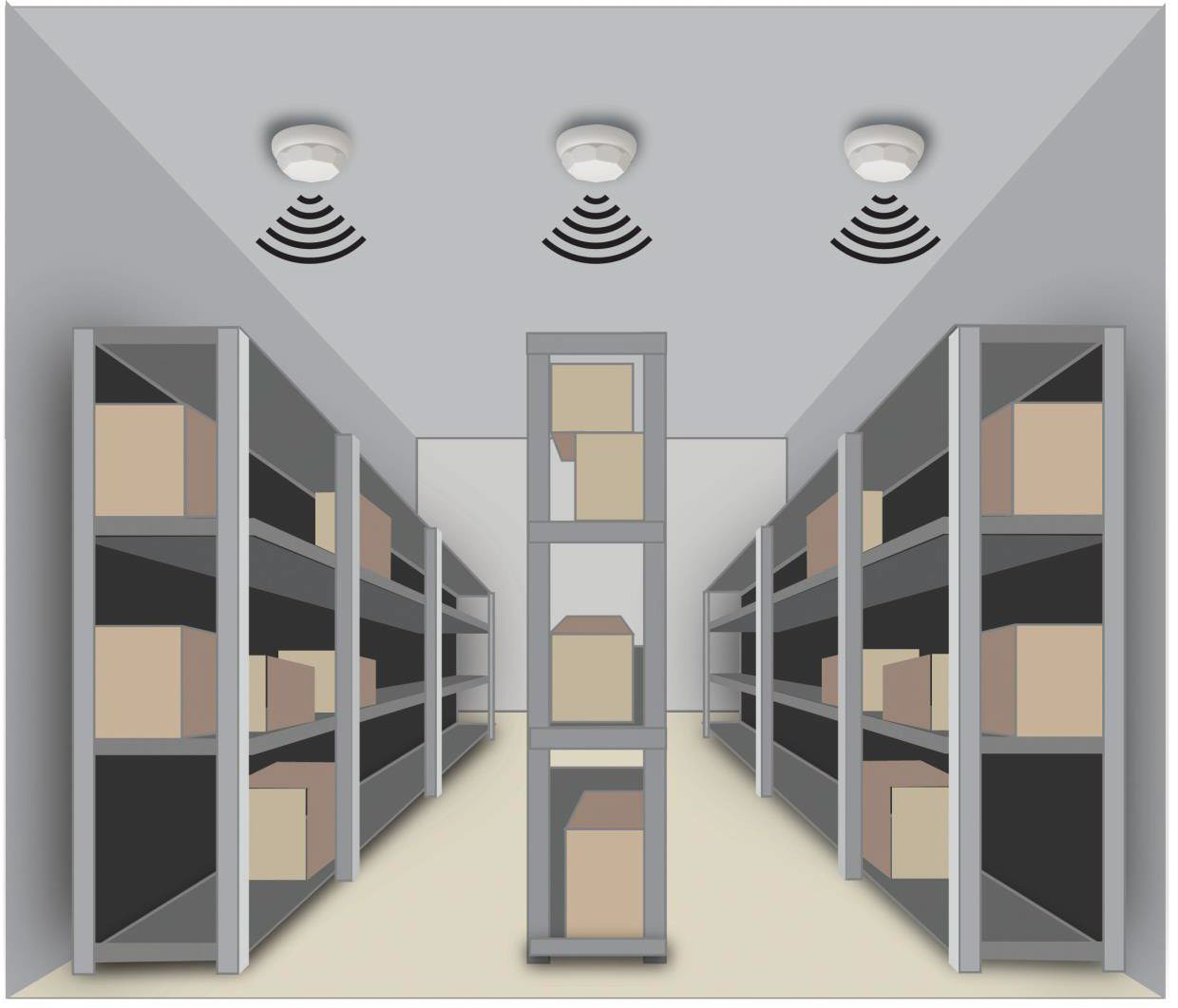
I want WiFi in my warehouse
For warehouse WiFi coverage use Omni directional antennas mounted on the ceiling. These antennas will provide 360° coverage for devices such as bar code readers, laptops and tablets in the warehouse area. When specifying these antennas consider the necessary beam width of the WiFi signal to cover all the areas that require wireless connectivity. Some Omni antennas have a wider beam width than others.
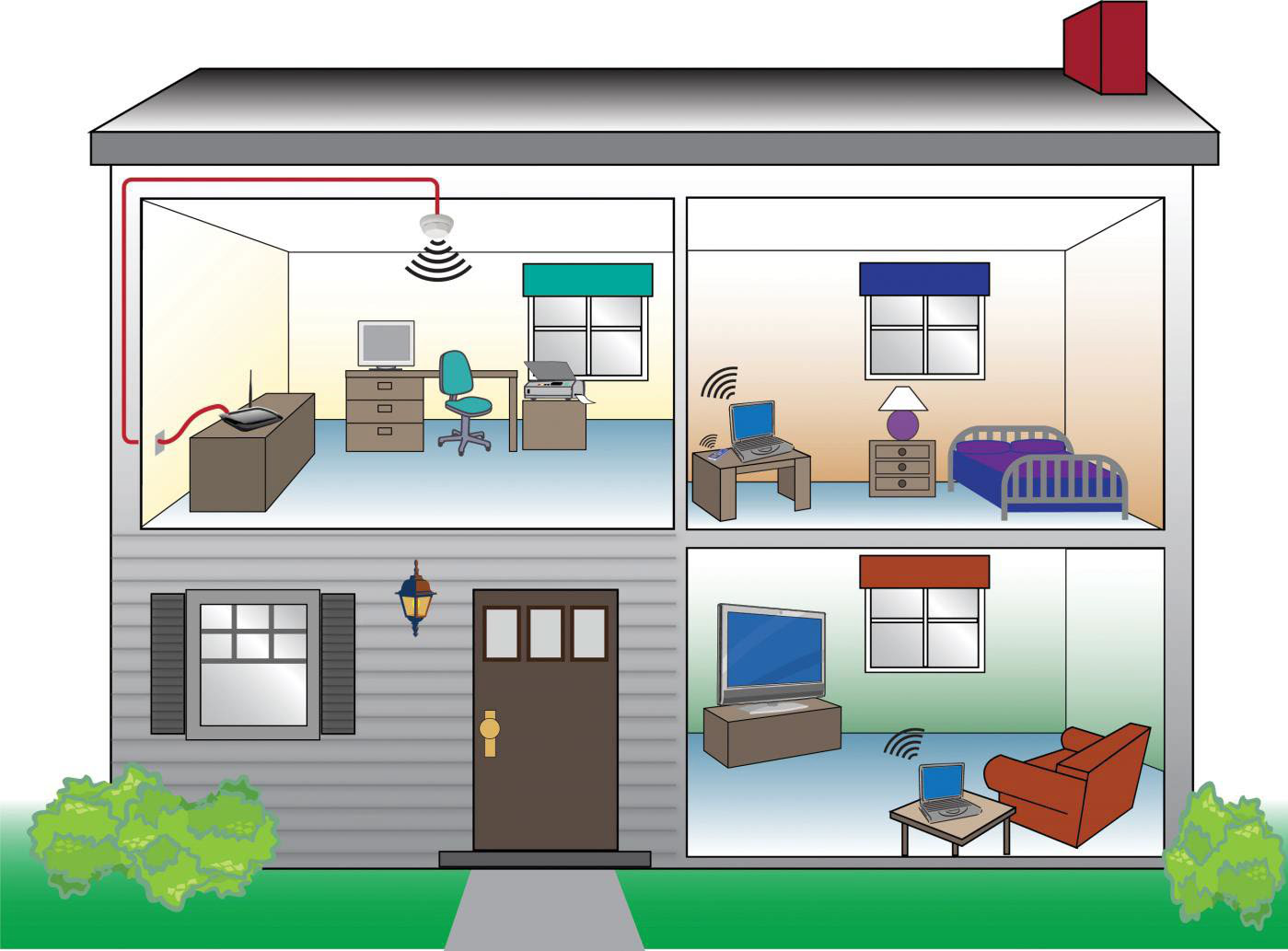
I need better WiFi coverage in my home
To optimize WiFi coverage in the home use an Omni directional antenna that is centrally located in the home and placed away from metallic objects and walls. In most home wireless networks the router or access point’s rubber duck antennas are usually close to a wall and in one corner of the house. This antenna placement limits your wireless coverage. By centrally locating the antenna and moving it away from walls etc. better coverage is realized.
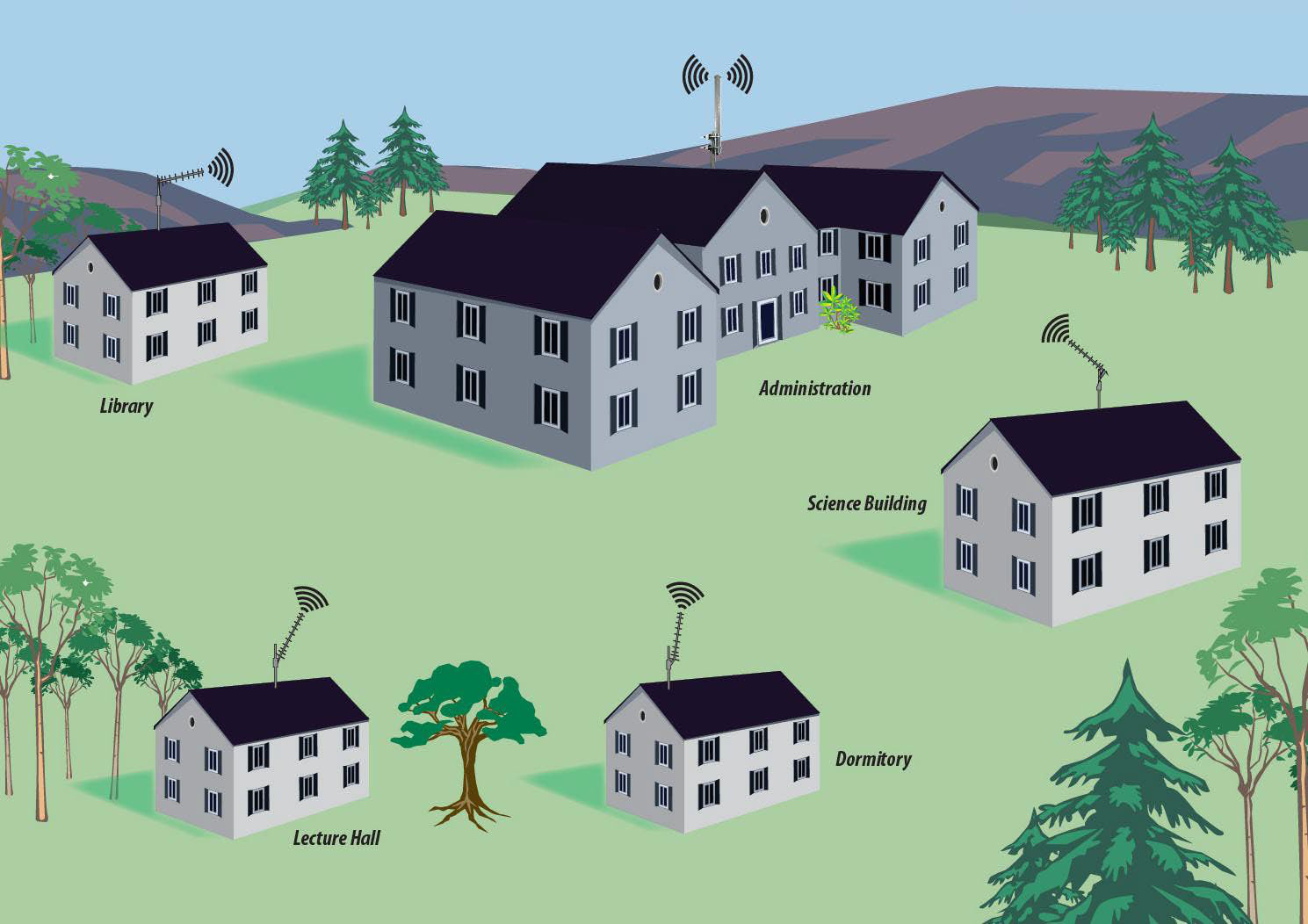
I want to install WiFi in a campus environment (outside)
In this case you can use several directional antennas with an Omni directional antenna at the central building to connect the buildings in the campus. This is called a point to multipoint network. As with any outdoor WiFi network, clear Line of Sight is critical. Additionally, proper antenna alignment is necessary to ensure optimal signal quality.
I want to provide WiFi access in my outdoor cafe
For an outdoor cafe use Omni directional antennas to provide 360° signal coverage to customers and employees. Try and mount the antenna as close to the center of the WiFi coverage area as possible. Also remember that if the Omni antenna you use has too much gain, then the users beyond the café area will tend to get better signal than those within the cafe area. Using a lower gain (dBi) antenna will result in more of a doughnut shaped signal pattern which gives better vertical coverage bringing the signal close to the ground where patrons are sitting with their WiFi devices.

Read About Choosing the Right WiFi Antenna
Selecting the right WiFi antenna is a critical decision in wireless network design. Whether you need wide-area coverage or long-distance connectivity, understanding antenna types, gain, and environmental factors ensures optimal performance.
By aligning antenna choice with your specific application, you can significantly improve network reliability, efficiency, and coverage.
Frequently Asked Questions
A: Omnidirectional antennas broadcast signals in all directions, making them ideal for general coverage. Directional antennas focus signals in a specific direction, providing longer range and better performance for targeted links.
A: Not always. Higher gain increases range but reduces coverage area. It’s important to balance gain with your coverage needs.
A: Obstructions like buildings or trees can block signals. Clear line-of-sight ensures stronger and more reliable connections, especially for outdoor links.