
The Internet of Things (IoT)
Download the Full Whitepaper (PDF)Executive Summary
Key Takeaways:
- IoT sensors convert real-world data into digital signals that can be stored, analysed, and transmitted.
- Sensor technologies are rapidly evolving, replacing traditional mechanical and manual monitoring systems.
- Major sensor categories include environmental, atmospheric, physical, visual, electrical, chemical, and biological sensors.
- IoT is driving a data revolution, enabling real-time monitoring and intelligent decision-making.
- Connected sensors are being deployed across nearly all industries—from industrial automation to environmental monitoring.
- Integration with cloud and network systems expands the value of sensor data.
- Understanding sensor capabilities and limitations is critical for successful deployment.
Introduction
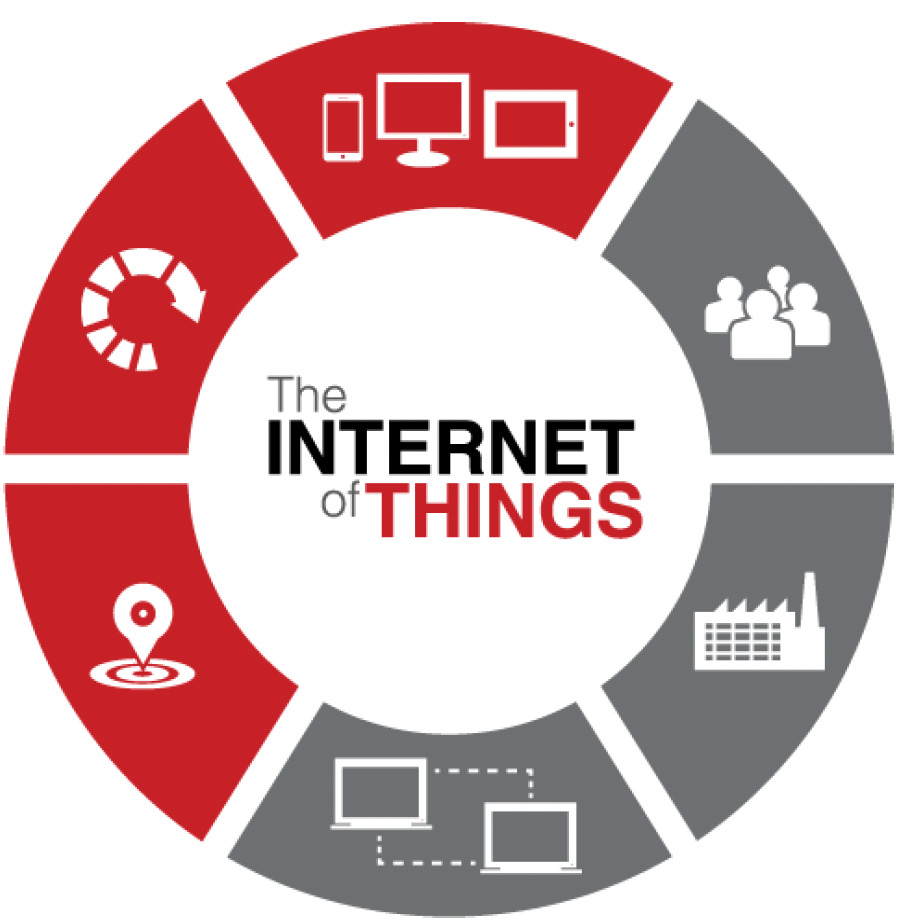
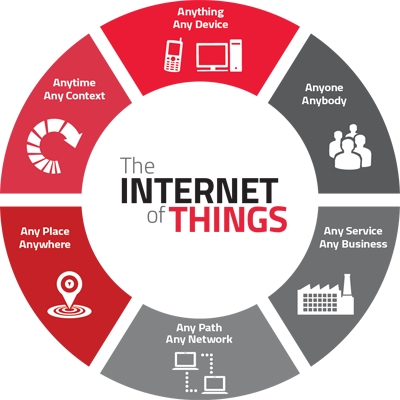
The Internet of Things refers to the concept of “things” or devices that are IP addressable giving them the ability to be monitored and controlled and to communicate with other IP enabled devices. As with any device or “thing” with an IP address, communication to and from the device can be achieved over a wired or wireless local area network (LAN) or wide area network (WAN) at any time, from any location.
Two instances of the IoT model exist, machine-to-machine (M2M) communication and machine-to-human (M2H) interaction. With a pure M2M model, IP enabled devices or machines communicate with each other to perform a task(s). With the M2H model humans are able to gather and analyze data from the device(s), as well as receive e-mail and text alerts from IP enabled “things” when certain predefined conditions are met. The vast benefits realized with the IoT model include greater operational efficiencies, reduced waste and lower costs of doing business. IoT applications span just about every industry and will provide seamless device connectivity and visibility on a global scale.
History / Background
The IoT story begins in 1999, when an RFID (Radio Frequency ID) technology researcher named Kevin Ashton gave a presentation to Proctor & Gamble about the long-term view of interconnected sensor and computing systems. In that talk, Ashton described a world where Internet connectivity would extend far more deeply into our lives, by becoming an invisible but omnipresent resource throughout society. Computers themselves, he said, machines designed to collect real time data and act on that data autonomously, would ultimately become the world’s primary users of the global Internet.
Many saw that as a science fiction story at the time. The Internet of 1999 - much like the Internet of 2015 - was still based on the user paradigm of desktop computing, in which networked computers existed mainly to interact with people. Ashton coined the term “the Internet of Things” to describe a future in which the lowering costs of increasingly smaller sensor electronics, increased flexibility and resiliency of the global Internet infrastructure, and the introduction of more powerful data analytics would combine to enable mass interaction between computer systems and the physical world.
With the Internet of Things, most networked devices would be primarily designed to interact with other networked devices in machine-to-machine (M2M) communications, generating information value from reciprocating data exchange protocols.
Not two decades later, the Internet of Things is now gradually taking shape. More intelligent field devices and monitoring systems are making industrial facilities smarter, more flexible and more cost efficient. Smart power grids are being deployed now with advanced predictive capabilities, allowing energy company field technicians to accurately predict maintenance requirements and local power demand. In hospitals, embedded sensors empower medical staff to monitor patient conditions more efficiently than ever before.
The world of ubiquitous low- cost sensors that Kevin Ashton foresaw in 1999 is the world that we live in today. No longer are Internet-enabled devices limited to the web browser, and no longer are most of those information streams designed to appear on a computer screen for a users’ eyes. A growing portion of Internet traffic now never crosses the paths of human eyes, and advanced data mining and analytics platforms are making countless lightning-fast decisions around us based on that data.
Welcome to the Internet of Things.
The Internet of Things: Limitless Applications
In every technology trend, a gradual accumulation of ideas and innovations finally reaches a tipping point, a place where the trend finally breaks free into the mass consciousness. For the Internet of Things, that tipping point has been reached.
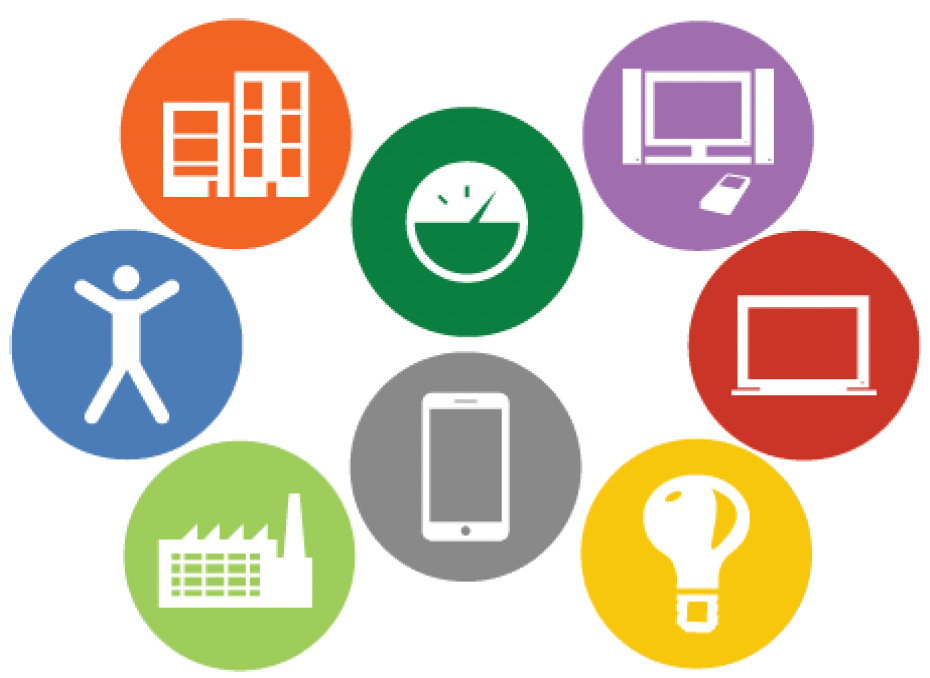
Consider some of the IoT applications that are in service today: Industrial Automation. An early adopter of IoT technology, industrial manufacturers have already implemented complex IoT sensor and computing systems at all levels of the automation process. From assembly robots and inventory management systems, to packaging and delivery, each stage of the modern industrial process is now commonly driven by data analytics processes fed in real time by embedded IoT sensors.
A staggering range of manufacturing applications benefit directly from IoT sensor systems. Embedded sensors can detect temperature variations, vibration levels, local production efficiencies and more. The latest generations of PLCs (Programmable Logic Controllers) - the devices which interface control systems with various communications networks - are now regularly designed with Ethernet interfaces supporting wired and wireless network connectivity. At each stage of the manufacturing process, IoT is producing powerful results.
Transportation
According to the U.S. Department of Transportation, nearly 33,000 American deaths in 2013 were directly attributable to an automobile accident. While that number has been steadily falling over the last decade, continued focus has been made in the transportation industry to make driving safer and more efficient for everyone.
Today’s automobiles are already full of sophisticated sensors and networks, monitoring every aspect of a car’s engine functions, safety features and various subsystems. IoT-enabled sensors are now also being implemented in freeways, turnpikes, and interchanges, monitoring traffic dynamics in real time to improve emergency services and traffic management. IoT devices are used every day now to track vehicle fleets, manage public transit systems, and coordinate public safety operations.
In the near future, the Internet of Things will revolutionize transportation with a product that is very nearly already here: the smart car. Melding artificial intelligence, GPS mapping and highly sophisticated IoT sensor systems, the car of the near future will be able to drive itself, cooperating with highway sensor networks and systems to create a mass automated transportation network.
Healthcare
As the population ages and healthcare costs continue to spiral upward, an enormous pressure exists today for healthcare providers to generate better patient outcomes at lower price points and with much greater efficiency.
According to a 2013 analysis by the Kaiser Family Foundation, it costs over $1,700 per day to keep a patient in the hospital. For that reason, much attention has been paid to IoT technology as an option for promoting more at- home patient care as an alternative to hospital stays. Remote monitoring solutions are already in service today to do just that, allowing doctors and nurses to monitor the status of patients at home with the same data availability that a hospital stay would provide.
The second major area for IoT in healthcare is drug management. Medication is already today regularly tracked in the healthcare organization using RFID tags and complex inventory and allocation management solutions. Now, drug manufacturers are developing medication delivery systems that embed IoT sensors directly and safely into the drug itself, creating “smart pills” that can both deliver the dosage and monitor patient status at the same time.
Agriculture
Farming today has evolved far beyond the basic tools of plow, tractor and irrigation system. Now, farmers are increasingly dependent on the availability of mass real time data and smart computing systems designed to forecast crop conditions, equipment health and yield predictions. IoT sensors, embedded in tractors and the planting fields themselves, generate information that is then correlated with GPS satellite data to create sophisticated portraits of farm conditions. Called Precision Agriculture, this very powerful method of farm management is expected to grow as a market to $3.7 billion by 2018.
A Customer Case Study
Farmobile is a farmer-focused big data company whose vision is to simplify data collection from machines to decisions. Delivering the simplest way for farmers to get their data in one place is crucial. Realizing this Farmobile developed the Electronic Farm Record, or EFR, to act as a central database of all records and data gathered over time to help plan for future growing seasons.
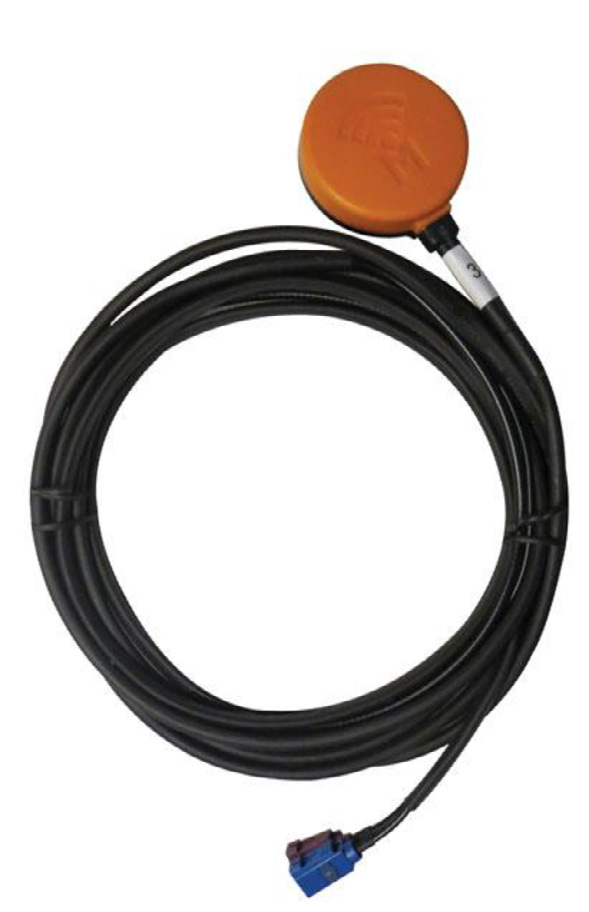
In order to get all of the required data to the EFR, remote, mobile communications units must be installed on various pieces of farm equipment. Farmobile required a multi-band GPS/Cellular/3G/LTE mobile antenna to support this real-time data capture application. L-com worked with Farmobile to provide them with the custom antenna solution they required. The design combines the required cellular bands and GPS together in a single package. The design also incorporates an integral magnet in the base allowing the antenna to be attached to mobile farm equipment. L-com’s ability to custom design to the customer’s changing specifications and provide fully functional products in a minimal amount of time was a great advantage for Farmobile.
Energy
As energy consumption continues to grow, meeting the great demands of production and delivery has become costly and daunting. The U.S. Energy Information Administration, projects that world energy consumption will grow by 56% between 2010 and 2040. To remain competitive energy production, delivery and management companies must leverage technology even more to maximize revenue and profits.
Mueller Systems provides smart metering solutions to optimize the delivery and use of energy and water. Municipalities that supply electricity, water or gas, or any combination of the three services, need innovative ways to increase efficiencies, reduce costs, conserve energy and water, and improve customer service.
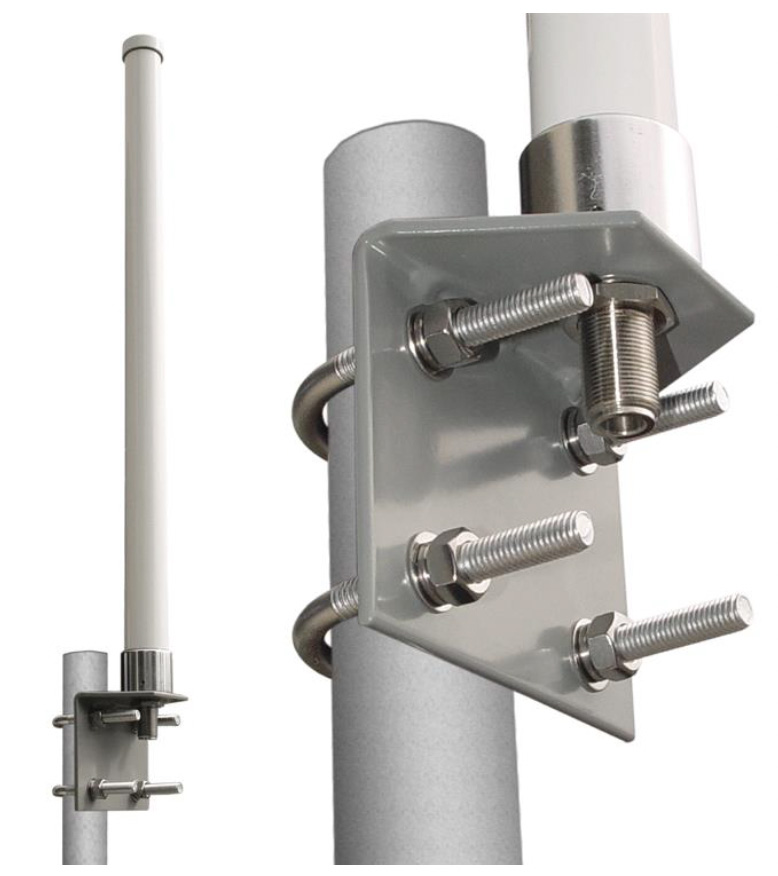
Mueller Systems required a high-performance, robust 900 MHz antenna to meet the needs of its Mi.Net® Mueller Infrastructure Network for utilities wireless metering system. The antenna needed to integrate with Mueller’s Mi.Net® wireless sensors and be able to stand up to the elements as well as support Non-Line of Sight (NLOS) and mobile applications. After consulting with Mueller’s engineering team and reviewing the system requirements, L-com positioned its 800/900 MHz HGV-906U all-weather Omni-directional antenna. The HGV-906U offers the high gain and wide coverage required by Mueller Systems as well as superior all-weather performance. Mueller also chose L-com’s high-performance low loss coaxial cables and RF coaxial connectors to enable seamless wireless connectivity for its Mi.Net® wireless network.
The Everyday Workplace
Most offices today are familiar with the first wave of the Internet of Things in an enterprise environment. Mobile communications, flexible collaboration solutions, security systems, document management, and teleconferencing have all adopted IoT technologies in some form, and as a result, today’s workplace is smarter and more efficient than ever before. These solutions, however, are already considered old news by workplace efficiency experts. IoT sensors are now being embedded in office lighting systems, for example, enabling companies to accurately track employee movement and area occupation. With this data, analytics systems can determine how to manage HVAC climate controls, room lighting levels, space utilization and asset movement invisibly and effortlessly.
Consumer Products
There are virtually no consumer products today that cannot in some way benefit from the inclusion of IoT sensor systems. Smart phones and tablets were only among the very first wave of devices in the consumer product realm. In the future, IoT sensors will begin appearing in clothing, consumer electronics, food packaging, and much, much more. These tiny sensor devices will interact with each other to form small local networks, as well as interact with larger cloud-based computing platforms. The span of applications for IoT in consumer products is limited only by the popular imagination, and likely will exceed even that.
Factors Perpetuating the IoT model
The coming of IPv6. The Internet Protocol (IP) is the mathematical foundation of all Ethernet data traffic today, and the version that most people are familiar with - version 4, or “IPv4” for short - is reaching its breaking point. The 32-bit IPv4 address space has only room for a total of 4.3 billion unique number combinations for assignation to Internet-enabled devices, which twenty years ago seemed like a nearly infinite amount of addresses. In fact, the IPv4 address space was declared exhausted by IANA in 2011, and the Internet has been struggling to grow ever since.
While a variety of address space mitigation strategies have helped the situation, the solution ultimately is a mass transition to a newer version of the Internet Protocol: Version 6. Unlike its predecessor, IPv6 was designed for the needs of the commercial Internet, with greater network-level security strengths and simplified routing. Most of all, however, IPv6 has a dramatically larger, 128-bit address space, with the ability to support unique IP addresses for 340 trillion trillion trillion individual devices.
How much larger is that? The IPv4 address space is large enough to support one Internet device each for two- thirds of the current population of Earth. In contrast, unique IPv6 addresses could be assigned to every cell in the bodies of every human being who has ever lived, many times over - and the IPv6 address space would still not approach anywhere near exhaustion. Possible IPv6 addresses outnumber the current estimated number of stars in the universe.
While the global transition to IPv6 has been gradual, it is happening. And as the implementation process continues to move forward, countless new devices are poised to hit the market and take advantage of it.
The development and implementation of sophisticated, standardized IoT protocols.
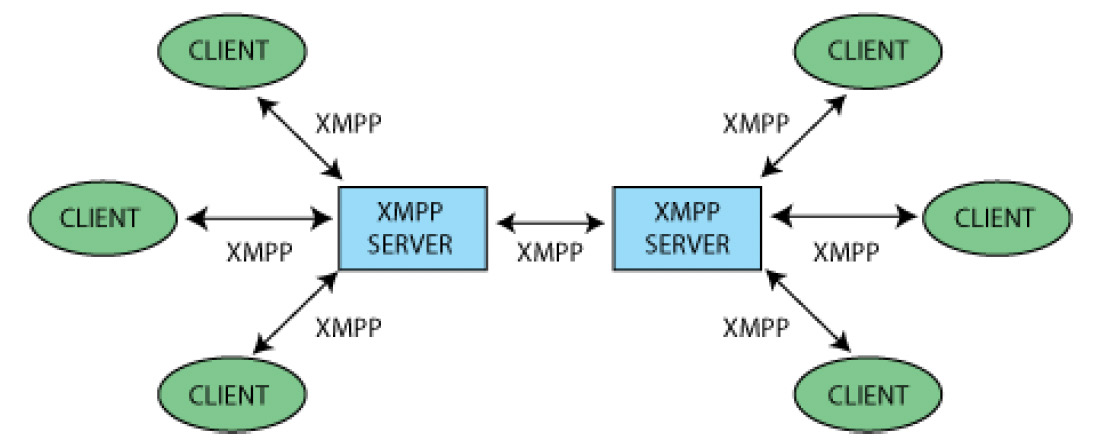
The central idea behind the Internet of Things is that fully autonomous computing and sensor platforms will operate best when they can communicate with other systems without interference from human beings. This will require a set of transmission protocols designed specifically for this type of device-to-device communication. A variety of standardized protocols are now in place to create the data bridge necessary between IoT devices and large-scale computing platforms. These include MQTT (Message Queue Telemetry Transport, for managing telemetry data and remote monitoring), XMPP (Extensible Messaging and Presence Protocol, for device addressing), DDS (Data Distribution Service, a high-performance protocol for M2M data exchange), and AMQP (Advanced Message Queuing Protocol, for server-to-server transactions). Standardizing IoT operation around a handful of well documented, easy to implement protocols has made a tremendous difference in developing practical IoT network solutions.
Falling prices on sensors, network bandwidth and computing power
In accordance with Moore’s Law, the prices of computing power continue to fall significantly, as devices become smaller, more powerful, and more cost effective to mass produce. Sensor prices have fallen by over 50% in the last decade. In that same time, the cost of network bandwidth has plummeted by a factor of nearly 40 times, while the cost of computer processing has declined by a factor of almost 60 times. Devices, meanwhile, are becoming much more powerful, much smarter and much smaller. Combined with nearly universal Wi-Fi and cellular network coverage at very low costs, the economies of scale are finally present for a mass introduction of immensely powerful networked sensors and processing platforms, as well as powerful, highly scalable networks connecting them.
Mobile smart devices
With the introduction of smartphones, personal computing forever merged with telephony to create something new: personal mobile communication. From the same device, a user today can make phone calls, surf the Web, play games or listen to music. At work, they can instantly review the operational status of a complex piece of industrial equipment, monitor the activities and progress of their field teams, or access geophysical mapping data for a large- scale power grid.
The rise of Big Data
The Internet of Things will create vast volumes of real time data, far more information than any human being can process and manage. Enter Big Data. With cloud-based data analytics platforms and highly advanced predictive algorithms, Big Data processing systems have already been designed and deployed to collect, synthesize and make use of the ocean of data predicted to be produced by an IPv6-powered Internet of Things.
The Future of the IoT
As the IPv6 transition continues to move forward, more and more IoT-driven electronic devices will begin appearing on the market. They will all be designed to accurately sense the physical world around them, and to share that data with each other and with extremely powerful data analytic algorithms. Those computing platforms, meanwhile, will use that data to generate more complex decisions and predictive forecasts. Limiting the growth of the Internet of Things today is one major factor: the availability of wireless mobile Internet bandwidth. The last generation of cell towers and mobile communication networks was simply not designed to effectively handle the huge growth in mobile data traffic created by the recent proliferation of smartphones and mobile computing devices. The current wireless data infrastructure in North America is primarily a conglomeration of conventional cell towers, fiber optic backhauls, local Wi-Fi networks and per-location small cell transmission systems. The major telecommunication carriers are working hard today to expand wireless bandwidth availability and modernize their broadcast networks to accommodate exponentially larger service demand.
As individual IoT sensors combine their data into larger networks, and those networks combine their data into even larger networks, soon entire communities will be monitored and governed using advanced data analytics and real time sensor data. Many Smart City systems are already in service around the world today, applications that include smart utility meters, automated crime analysis, traffic light management, and citizen interaction platforms.
Recommendations
To successfully implement IoT sensor solutions, organizations must go beyond simply selecting devices. A strong foundation begins with understanding the type of data required and matching it with the appropriate sensor category. Since IoT ecosystems are highly interconnected, ensuring reliable connectivity and seamless integration with cloud platforms is essential.
Businesses should also consider scalability early in the design phase, as IoT deployments often expand over time. Evaluating sensor limitations, environmental conditions, and data processing requirements can prevent performance issues later.
Read About The Internet of Things (IoT)
The IoT Sensors & Applications White Paper provides a foundational understanding of how connected sensors are reshaping modern industries. By converting real-world inputs into actionable digital data, IoT sensors are driving a new era of intelligent systems, automation, and real-time decision-making.
As the adoption of IoT continues to grow, the focus must shift from just deploying sensors to building robust, scalable, and well-integrated ecosystems. Organizations that priorities the right sensor selection, connectivity, and data strategy will be best positioned to unlock the full potential of IoT.
Conclusion
The story of the Internet of Things has only just begun, and will one day soon include nearly every aspect of modern life. For businesses, governments and individuals willing and able to meet that future, the opportunities afforded by IoT technologies and smart communities are nearly infinite. For society as a whole, the Internet of Things represents something even greater: human connection, on a level and at a depth never before considered possible.
L-com is committed to developing and supporting solutions that fuel IoT applications that will reduce operational costs, increase revenue and improve business efficiencies for our customers. As our investment in R&D and IoT technology acquisitions grow we will continue offer a true end-to end connectivity solution bringing significant value to our customers.
Resources
1. https://thefinancialbrand.com/wp-content/uploads/2015/10/IoT-Visual400.png

Frequently Asked Questions
A: IoT sensors are devices that capture real-world data (such as temperature, pressure, or motion) and convert it into digital signals for analysis and transmission over networks.
A: The white paper categorizes IoT sensors into environmental, atmospheric, physical, visual, electrical, electromagnetic, chemical, and biological types.
A: They are used in industrial automation, environmental monitoring, smart infrastructure, healthcare, and many other applications where real-time data is required.
A: They enable continuous data collection, allowing organizations to monitor systems, optimize processes, and make data-driven decisions.