
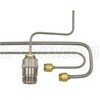
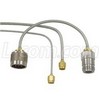
Semi-Rigid, Formable Coaxial Cables
Engineers designing RF and microwave systems specify semi rigid cables with solid copper outer sheaths for excellent shielding at higher frequencies. Formable coax cable alternatives offer greater flexibility and easy hand shaping without special tools, ideal for creating pre-bent assemblies. L-com stocks .085 and .141 cable assemblies in both semi-rigid and formable types, all 50 Ohm rated. Fully tested assemblies in N-male and SMA connector configurations, with custom options, are available with same-day shipping.
For comprehensive RF connectivity solutions beyond semi-rigid and formable cables, explore our Coaxial Cables category for bulk cable options, tools, low PIM products, and complete coaxial cable assembly solutions.
Related Categories:
- Coaxial Adapters
- Coax Baluns - 75 Ohms,120/100 IDC,BNC,RJ45,Patch Panels,Cards,Inline
- Coaxial Connectors
- Coaxial Kits - Adapters, Ratchets, Crimpers & Strippers
- Coax Terminators - SMA, BNC, Type-N & Type-F
- Coax Tools - Terminate Cable Assemblies
FAQs
What is the difference between semi-rigid and formable coaxial cable?
Semi-rigid coax cables have a solid copper outer sheath that provides excellent shielding, especially at higher frequencies, but are not very flexible and are not intended to be flexed after initial forming. Formable coax cables are designed for greater flexibility and easy hand shaping without special tools, making them an attractive alternative to semi-rigid and ideal for creating pre-bent assemblies. Semi-rigid offers superior shielding for high-frequency applications, while formable provides easier installation in complex routing situations.
What are the standard sizes for semi-rigid coax cable?
L-com offers .085 and .141 coax cables in both semi-rigid and formable types, available in 50 Ohm impedance. These size designations refer to the outer diameter in inches and represent industry standards for RF and microwave applications. Standard assembly lengths are 6, 12, 18, 24, and 36 inches, suitable for test equipment, medical devices, and communication systems.
Can semi-rigid cable be bent after installation?
Semi-rigid coax cables are not very flexible and are not intended to be flexed after initial forming. Applications requiring flexibility after installation should specify formable coax cable instead, which is designed for greater flexibility and easy hand shaping without special tools.
What connectors are available for .085 and .141 cable assemblies?
L-com's fully tested .085 and .141 coax assemblies are available in N-male to N-male, N-male to N-female, N-male to SMA-male, and SMA-male to SMA-male configurations for both semi-rigid tin-plated standard copper and formable variants. Custom assemblies can be built with a wide range of available connectors, including lead-free options.
What applications use semi-rigid and formable coax cables?
These cable assemblies are well-suited for microwave and RF systems, test and measurement equipment, commercial and military applications, and satellite and terrestrial wireless communications. Semi-rigid coax cables are widely used in medical imaging equipment, while formable coax cables are ideal for laying out and designing pre-bent semi-rigid assemblies.
Need Assistance Selecting Semi Rigid Cables or Formable Coax Cable Assemblies? Our engineering team provides expert technical guidance on cable type selection, connector configurations, standard versus custom assembly options, and frequency specifications for your RF system requirements. For additional information on related products, our expert technical support team is available to assist you in selecting the ideal semi-rigid and formable coax cables to meet your requirements.
Contact Sales:Sales@L-com.com
Product Technical Support:techsupportrf@infiniteelectronics.com
L-com offers same-day shipping and maintains one of the broadest in-stock selections of semi rigid cables and formable coax cable assemblies for domestic orders.
