
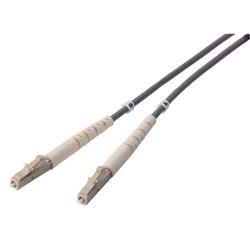
Duplex fiber optic cable contains two fiber strands, typically using one strand to transmit and the other to receive data. This supports simultaneous bidirectional communication between devices such as switches, servers, modems and workstations. Duplex cables can use single-mode or multimode fiber and commonly connect optical transceivers in network infrastructure.
Key Takeaways
- Duplex fiber cable contains two fiber strands within one cable assembly.
- The two strands typically provide separate transmit and receive paths, enabling simultaneous bidirectional communication.
- Duplex fiber can use either single-mode or multimode fiber; simplex/duplex and single-mode/multimode describe different characteristics.
- Common applications include workstations, fiber switches, servers, fiber modems and optical transceiver connections.
- Duplex fiber optic cables are commonly available with connector types such as LC and SC and in zip-cord constructions.
What Is Duplex Fiber?
A duplex fiber optic cable consists of two strands of glass or plastic fibers within the same outer jacket of the cable. Duplex fiber cable, also called two-strand fiber cable, is most often used for communication between devices that require the transmit and receive signals to be on separate fibers. One fiber is usually assigned to transmission and the other to reception.
Instead of running two simplex fiber cables, a single duplex fiber optic cable can be run. Generally, duplex fiber optic cables are available in a zip cord construction.
How Duplex Fiber Supports Full-Duplex Communication
The names simplex and duplex are derived from telecommunication and computer networking terms that describe the flow of information carrying signals. In a simplex channel, information carrying signals travel only in one direction from the transmitter to the receiver. A half-duplex system is essentially a simplex channel that can be switched to go in either direction, but only carry signals traveling in one direction at a time. A full duplex system has two combined channels, and generally each channel has a designated direction.
With full-duplex fiber, separate transmit and receive fibers allow signals to travel in both directions at the same time, enabling simultaneous bidirectional fiber communication without switching. Each duplex fiber connection pairs one device’s transmitter with the other device’s receiver.
“Duplex cable” describes the construction: two fibers in one assembly. “Full duplex” describes the communication behavior: signals moving in both directions simultaneously. A duplex cable is how a full-duplex link is commonly built, but the two terms are not the same thing.
An example of duplex communication is the common telephone (plus a DSL Filter for Phone if you need this as well).
Simplex vs Duplex Fiber
When comparing simplex vs duplex fiber, the difference is fiber count. A simplex fiber cable assembly contains one fiber. A duplex fiber assembly contains two, which is why duplex links normally use one fiber to transmit and the other to receive.
Some optical systems send signals in both directions over one fiber by using separate wavelengths; RFoG is one example of this single-fiber approach. Some simplex links also use paired BiDi transceivers that transmit at different wavelengths in each direction over a single fiber, which provides single-fiber bidirectional transmission.
Duplex Fiber vs Single-Mode and Multimode Fiber
Duplex and single-mode or multimode are separate classifications. Duplex refers to fiber count, while single-mode and multimode describe the optical propagation characteristics of each fiber. This is a different distinction from simplex vs duplex.
Simplex can use single-mode or multimode fiber, and duplex fiber may also be multimode or single-mode. Multimode fiber is designed to carry multiple light modes. Adding additional modes requires a different fiber construction that ultimately reduces the transmission distance of the cable while also enabling higher data rate transfer. When comparing single-mode vs multimode fiber, remember that single-mode duplex fiber and multimode duplex fiber are both common duplex fiber types.
Duplex Fiber Cable Constructions and Connectors
Duplex fiber cables are generally available in a zipcord construction, in which two fiber cables are joined side by side and can be separated. Round duplex constructions, with both fibers inside a single round jacket, are also used.
Duplex LC fiber and duplex SC fiber are two common connector configurations. Duplex fiber connectors typically join the two fibers in a pair so they can be plugged in together.
Polarity matters in any duplex fiber connection. Transmit must connect to receive at the opposite end, so fiber polarity should be confirmed when installing or ordering cable assemblies.
Common Duplex Fiber Applications
Duplex fiber is used in many network applications, including:
- Workstations
- Fiber switches
- Servers
- Fiber modems
- Media converters
- Data centers
- Equipment-room connections
Duplex fiber optic cables are commonly used with standard optical transceivers, such as SFP, 10G SFP+, 40G QSFP+ and 100G QSFP28, as a fiber transceiver cable between devices. Duplex fiber may also be used to interconnect or cross connect between fiber optic transceivers and MPO/MTP cassettes if there is a long enough distance between the two devices.
For an integrated alternative, active optical cables combine optical fiber and conversion components within a complete cable assembly.
Choosing the Right Duplex Fiber Cable
When choosing duplex fiber cable, match the following to your equipment and link:
- Fiber type: single-mode or multimode.
- Connector: for example, duplex LC cable or duplex SC.
- Polarity: so transmit connects to receive at the opposite end.
- Wavelength: the wavelength the transceivers use.
- Transceiver standard: the standard the duplex fiber transceiver supports.
- Required distance: the length of the link.
Do not choose a cable based only on the SFP or QSFP form factor. The form factor describes the physical module, not the fiber type, wavelength or distance it supports. Checking all of these items helps ensure fiber cable compatibility.
Check out our wide selection of duplex fiber cables.
Frequently Asked Questions About Duplex Fiber
What Is Duplex Fiber Optic Cable?
Duplex fiber optic cable contains two fiber strands in one cable assembly. One fiber is usually used to transmit and the other to receive.
What Is the Difference Between Simplex and Duplex Fiber?
Simplex fiber has one fiber, and duplex fiber has two. Duplex links normally use separate transmit and receive fibers, while some simplex links use BiDi transceivers and different wavelengths.
Is Duplex Fiber the Same as Full-Duplex Communication?
No. Duplex describes the cable construction, while full duplex describes communication in both directions at the same time. Duplex fiber is commonly used to build full-duplex links.
Can Duplex Fiber Be Single-Mode or Multimode?
Yes. Duplex refers to fiber count, so a duplex cable can use either single-mode or multimode fiber.
What Are Duplex Fiber Optic Cables Used For?
They connect devices such as workstations, fiber switches, servers and fiber modems, and are commonly used with optical transceivers such as SFP, SFP+, QSFP+ and QSFP28.